Google

Thursday, 24 March 2022

Nothing!! Yes, NOTHING Phone is on its way to hit Market places

           Nothing Phone Launch Event      


Carl Pei - the man behind the Nothing brand made some important announcements today. Nothing is not an audio company as previously thought and it aims to be an ecosystem rival to the likes of Apple. Pei even went as far as claiming that Nothing aims to be “the most compelling alternative to Apple” with products that connect and function seamlessly. The company is in fact reading an entry in the smartphone market which will be dubbed Nothing phone (1) and will run a custom user interface on top of Android dubbed Nothing OS.

As described by Pei, Nothing phone (1) will “be a breath of fresh air to the sleepy smartphone industry” bringing better value to users with a one-of-a-kind design. No actual specifications were provided but we got a clear indication that Nothing is partnering with Qualcomm which is the likely chipset provider as well as Samsung, Sony, and Visionox which will also be key component suppliers.

Pei confirmed more information will be shared later this summer signaling a likely launch for the Nothing phone (1) and guaranteed 3 OS updates and 4 years of Android security updates. We also got a cryptic schematic of what’s believed to be the phone (1)’s back design which may feature notification lights and a transparent back design expected to expose some of its key components.

Nothing OS will be the custom Android skin power the Nothing phone (1) and the Nothing OS launcher will be available to download and use for select Android smartphones in April. The premise behind the skin is a smooth and fast user experience without any bloatware or heavy system apps. The interface features a dot matrix design with font, icons, and widgets throughout the operating system having a unified look.

Pei also talked about dynamic RAM caching which will help your most-used apps launch faster. The UI has gentle changing animations and a uniform design. First-party apps like the voice recorder come with a minimalist design and a cool rewind feature.

MORE ABOUT NOTHING: 


Nothing brand is hosting its global event on March 23, where the company is expected to reveal a slew of products for consumers. The launch event from Nothing will be live-streamed from 7:30 PM later today, where Carl Pei, Founder, Nothing will host the keynote and talk about his company’s plans for this year.

The company has so far launched its Nothing true wireless earbuds in the market. And now, it seems ready to enter the main arena with a Nothing smartphone launch expected at the event.

The Nothing launch event will be available via the Nothing YouTube page at 7:30 PM IST on March 23. The company is also offering the event live stream on its official website for viewers.

WHAT TO EXPECT

Carl Pei has used social media to tease multiple hints about what Nothing could launch in the market. He had recently shared an update about being back on Android, which suggests Carl has been testing the purported Nothing smartphone, likely to be powered by a Snapdragon chipset.

Adding further fuel to rumors, Carl was spotted at the Mobile World Congress 2022 (MWC 2022) in Barcelona, hanging out with Qualcomm executives, and even reportedly showing a prototype of the Nothing phone with the company’s engineers.

Nothing did talk about having five products lined up after its truly wireless earbuds for consumers in 2022. And it is expected that a smartphone could be among the lineup. In addition to the Nothing phone, reports have also talked about Nothing launching a power bank that could support fast charging for other devices.

The global launch event this week is going to put all those rumors to bed, and we are hoping that Nothing ‘truly’ lives up to the hype created by Carl and Co. in the past few months.

Wednesday, 23 March 2022


Yamaha Electric scooter soon to India!


Yamaha E01 is not for sale yet to be launched

Japanese automaker Yamaha has unveiled the E01 scooter in its home country. It is currently available for demonstration purposes. As for the highlights, the vehicle bears a futuristic look and offers an LCD instrument cluster as well as an all-LED setup for lighting. It is fueled by an electric powertrain and promises a range of 104km on a single charge.

Context

Why does this story matter?

  • The Yamaha E01 offers good looks, great features, and decent performance. A lot of buyers in the Japanese market should be interested in getting their hands on this two-wheeler.
  • If the vehicle makes its way to our shores, it will have to be priced competitively. The rivalry in the electric two-wheeler segment will be raised to a great extent.

  • Design

    The scooter sports a windscreen and a single-piece seat

    The Yamaha E01 has a headlight-mounted front apron, a raised windscreen, a stepped-up single-piece seat with storage space beneath it, a rear tire hugger, and arrowhead-shaped mirrors. The maxi-style scooter packs an LCD instrument console with support for GPS, an all-LED setup for lighting, and rides on designer blacked-out wheels. There are also two storage compartments at the front.

    Information

    It runs on an 8.1kW electric motor

    The Yamaha E01 draws power from an 8.1kW electric motor linked to a Lithium-ion battery pack that can be charged from 0-90% in an hour using a quick charger. The vehicle promises a range of 104km on a single charge.

    Safety

    It gets three riding modes

    To ensure the safety of the rider, the Yamaha E01 is equipped with disc brakes on both the front and rear wheels, along with reverse function and traction control. It also gets three riding modes: Power, Standard, and Eco. Suspension duties on the maxi-style scooter are taken care of by telescopic forks on the front side and twin shock absorbers on the rear end.

    Information

    Yamaha E01: Availability

    In Japan, the Yamaha E01 is available via a lease program and cannot be purchased right now. The electric maxi-style scooter will also make its way to Europe as well as other markets soon.


    Monday, 21 March 2022


    OnePlus 10 Pro launch in India teased

    One luxurious design Two inspired colorways


    Rumors say that the smartphone manufacturer will also release the OnePlus TV Y1S Pro 43-inch with the OnePlus 10 Pro later this month.

    OnePlus 10 Pro, the company's latest flagship smartphone for 2022, is slated to arrive later this month in India and other markets. OnePlus has officially teased the India launch of the OnePlus 10 Pro, which was released in China earlier this year. The OnePlus 10 Pro is powered by a Qualcomm Snapdragon 8 Gen 1 CPU and will fight in the Indian market with the Samsung Galaxy S22, iPhone 13, iQoo 9 Pro Legend, and others. Furthermore, rumors say that the smartphone manufacturer will also release the OnePlus TV Y1S Pro 43-inch with the OnePlus 10 Pro later this month.

    The official OnePlus India Twitter handle previewed the launch. "Something10ng strong is coming," the firm promised, implying the OnePlus 10 Pro. The company has not specified a precise date for the launch, but it has stated that it will take place in March. OnePlus CEO Pete Lau stated last month at the Mobile World Congress (MWC) 2022 that the OnePlus 10 Pro will be released in India and other countries later this month.

    The OnePlus 10 Pro was released in China featuring a 6.7-inch QHD+ LTPO display, a 120Hz refresh rate, and a peak brightness of 1,300 nits. The Qualcomm Snapdragon 8 Gen 1 CPU is combined with up to 12GB of RAM and up to 256GB of internal storage in the smartphone. The smartphone has a 5,000mAh battery and supports 80W rapid charging as well as 50W wireless charging.

    The OnePlus 10 Pro has a triple rear camera with a 48-megapixel Sony IMX789 primary shooter, a 50-megapixel Samsung ISOCELL JN1 sensor, and an 8-megapixel telephoto shooter. The smartphone includes a 32-megapixel selfie camera on the front. The camera was created in collaboration with Hasselblad, a Swedish camera manufacturer.

    OnePlus 10 Pro has 5G, 4G LTE, Wi-Fi 6, Bluetooth v5.2, GPS/ A-GPS, and a USB Type-C port for connectivity.


    Monday, 14 March 2022

     VOLKSWAGEN NEW SEDAN VIRTUS


    Introduction


    Volkswagen has pulled the covers off the Virtus sedan in India, the first country where it will be launched. It will soon be followed by its debut in international markets, and the brand aims to export it to about 25 regions from here in India. The Virtus is the spiritual successor to the Vento, which was the brand’s first product when it arrived in the country.


    The new Volkswagen Virtus is based on the brand’s MQB-A0-IN platform which also underpins not just its sibling, the Taigun, but also one of its rivals and distant sibling, the Skoda Slavia. In terms of dimensions, the Virtus is almost similar to the latter, with the only exception being the length, courtesy of the longer front bumper. That said, let’s take a look at the car.


    Exterior Design

    The new Volkswagen Virtus is available in two versions, including Dynamic Line and Performance Line. The latter receives a host of cosmetic updates over the former, which we will be talking about a little later.

    Interiors and feature list


    Get inside the Volkswagen Virtus and you are greeted by a similar beige and black interior theme, which is visible on the dashboard as well as the seats, and gloss black inserts for the centre console. The GT Line, on the other hand, features black upholstery with contrast red stitching for the seats while the brushed aluminium inserts make way for red inserts.


    Release date:

    The Volkswagen Virtus sedan will be launched in India in May 2022.

    Variants:

    The Volkswagen Virtus will be offered in three variants including 1.0 MT, 1.0 AT, and 1.5 DSG.


    Performance: 


    Engine, transmission, power, torque, fuel type, Powering the new Volkswagen Virtus will be a 1.0-litre, three-cylinder, TSI petrol engine and a 1.5-litre, four-cylinder, TSI petrol engine. The former is tuned to produce 114bhp and 175Nm of torque, while the latter produces 148bhp and 250Nm of torque. Transmission options include a six-speed manual unit a six-speed torque converter automatic unit and a seven-speed DCT unit.

    Features:

    Feature highlights of the Volkswagen Virtus will include LED projector headlamps with integrated L-shaped LED DRLs, a single slat grille with chrome surrounds, fog lights, new 16-inch dual-tone alloy wheels, GT Line badging on the front fenders, wrap-around LED tail lights, Virtus lettering on the boot-lid, a 10-inch touchscreen infotainment system with Apple CarPlay and Android Auto, a fully-digital instrument cluster, wireless charging, ventilated front seats, an electric sunroof, automatic climate control, and cruise control.

    Price:

    The Volkswagen Virtus is expected to be priced between Rs 9-12 lakh (ex-showroom).

    Rivals:

    The Volkswagen Virtus will rival the Skoda Slavia, Maruti Suzuki Ciaz, Hyundai Verna, and the Honda City.

    Conclusion

    Volkswagen is expected to launch the Virtus sedan in May 2022, with deliveries likely to start soon after. The Virtus could be priced at a premium of Rs 30,000 when compared to the Slavia, but it is expected to undercut another rival, the new Honda City, by the same margin. 

    Sunday, 13 March 2022


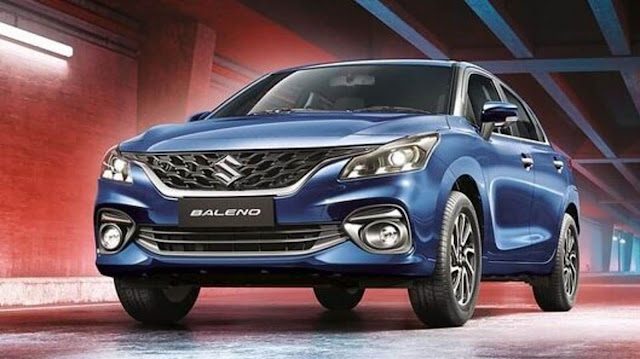
    THE NEW AGE BALENO-From MARUTI SUZUKI


    Maruti Baleno Price
    : Maruti has priced the hatchback from Rs
    6.35 lakh to Rs 9.49 lakh (ex-showroom).

    Maruti Baleno Variants: The new Baleno is offered in four trims: Sigma, Delta, Zeta, and Alpha.

    Maruti Baleno Engine and Transmission: It is powered by the same 1.2-liter DualJet petrol engine (90PS/113Nm) with idle-start/stop technology. It comes with a standard 5-speed manual and an optional 5-speed AMT. The claimed mileage figures for the MT are 22.35kmpl, while that of the AMT is 22.94kmpl. A CNG variant may be introduced later.


    Maruti Baleno Features: The updated Baleno gets a host of new equipment, including a segment-first head-up display, a 360-degree camera, rear AC vents, rear fast-charging USB ports (regular and type-C), and LED fog lamps. Other features include revised LED projector headlights, an Arkamys-tuned sound system, a rearview camera, a 9-inch touchscreen infotainment system with Apple CarPlay and Android Auto, and cruise control. Features such as auto climate control, push-button start/stop, and keyless entry have been retained.

    Buy Baleno Accessories here


    Though the overall silhouette and dimensions of the new Maruti Suzuki Baleno remain unchanged, it sports a new bumper along with a wider and slimmer grille. The grille gets chrome garnish that extends to the angular LED projector headlamps with LED DRLs. The shoulder line is revised and it does look more contemporary than before. The wing mirrors with integrated turn indicators and chrome door handles have been carried over from its predecessor along with the 16-inch alloy wheels.

    However, the biggest upgrade on the new Baleno is on the inside, and tech has been one of the major focus areas in the making of this new premium hatchback. The cabin layout has been revised as well and the biggest highlight is the new dashboard sporting a bigger and advanced 9-inch Smartplay Pro standalone touchscreen unit that takes center stage. It gets an all-new interface featuring much sharper and crisper graphics. The new Maruti Suzuki Baleno will also get over 40 connected car features along with Apple CarPlay and Android Auto, and we expect Maruti to also offer an in-built navigation system in the new SmartPlay Pro Plus. The list of features includes Alexa assistance, head-up Display, wireless charging, a new sound system with ARKAMYS tuning, and a 360-view camera view among others. That said, the major upgrade has to be six airbags on the inside adding to its safety nest.

    Under the hood, the Maruti Suzuki Baleno right now comes with a 1.2-liter VVT motor, and a more powerful 1.2-litre Dualjet, Dual VVT engine, and they are expected to remain unchanged. The former gets the option of both a five-speed manual and an automatic CVT unit, while the more powerful engine, which also gets the mild-hybrid system comes with a five-speed manual gearbox as standard. The new Maruti Suzuki Baleno will rival the likes of the Hyundai i20, Tata Altroz, Honda Jazz, and Volkswagen Polo.

    Specification of Maruti Baleno


    ARAI Mileage22.94 kmpl
    Fuel TypePetrol
    Engine Displacement (cc)1197
    No. of cylinder4
    Max Power (bhp@rpm)88.50bhp@6000rpm
    Max Torque (nm@rpm)113Nm@4400rpm
    Seating Capacity5
    TransmissionTypeAutomatic
    Boot Space (Litres)318
    Fuel Tank Capacity37.0
    Body TypeHatchback

    Wednesday, 9 March 2022

     ELECTRIC VEHICLE LEADS SMART IN SEGMENT FROM MG MOTORS


    MG ASTOR- India's First Car with AI Inside. INTRODUCTORY PRICE STARTS @ ₹9,98,000*

    L
    MG ZS EV 2022
    dsd
    MG Astor is offered in a choice of 12 variants – Prices of all have been increased for Jan 2022 Launched late last year, Astor is the most affordable MG car in India. It is priced from under Rs 10 lakhs and competes with the likes of Hyundai Creta and Kia Seltos. In Jan 2022, MG Astor has received its first-ever price hike. MG has also given price hikes to their other cars – Hector, Gloster, and ZS EV. MG Astor Prices Jan 2022 MG Astor is offered in a choice of 12 variants, 2 petrol engine options, and 3 transmission options. The trims are Style, Super, Smart, Sharp, and Savvy. Transmission options on offer are manual, CVT and 6AT. There is no diesel engine on offer. Base MG Astor Style MT petrol is priced from Rs 9.98 lakh, after a hike of Rs 20k. Super Astor has priced at Rs 11.5 lakh, with a Rs 22k hike. Super CVT has priced at Rs 12.98 lakh with a Rs 30k hike. Smart MT has priced at Rs 13.28 lakh with a Rs 30k hike. Smart CVT, Smart AT Turbo, Sharp MT, Sharp CVT – all get a Rs 30k hike. Sharp AT turbo gets an Rs Rs 22k hike and is priced at Rs 17 lakh. All Savvy variants get a Rs 35k hike.

    The new MG Astor employs a new concept of Car-as-a-Platform (CAAP), under which MG plans to offer a range of technology-driven services to its customer using the Astor as a platform. And eventually, the advanced tech will make its way across MG's model range. The MG Astor doesn't look much different from the ZS EV as it retains the same silhouette and borrows its design cues. The SUV sports a new bold celestial pattern grille, full LED Hawkeye projector headlamps with boomerang-shaped LED daytime running lights and a new bumper. It also gets new 17-inch turbine-inspired machined alloy wheels, heated ORVMs, and roof rails. At the rear, the SUV comes with new LED taillamps, and a new rear bumper with a chrome accentuated dual exhaust design. It will be offered in five exterior colours - Spiced Orange, Aurora Silver, Glaze Red, Candy White, Starry Black.

    On the inside, the cabin of the Astor looks similar to its electric counterpart, the ZS EV and gets three interior theme options. It also comes equipped with a 10.1-inch infotainment screen with Apple CarPlay and Android Auto, a 7-inch instrument cluster, a multi-functional steering wheel with chrome inserts, power-adjustable front seats, auto climate control, 360-degree camera view, air-purifier, electric parking brake and a panoramic sunroof. It also comes with a customised AI assistant, which understands natural language and supports up to 35 Hinglish voice commands. The new system offers over 80 internet features, including Wikipedia, jokes, news, festival GIFS, navigation, online music streaming, in-car control and critical in-car warning. As for safety, the SUV comes with 6 airbags, ISOFIX mounts, TPMS, ESP, traction control, hill descent control, and all four-disc brakes.


    Under the hood, the MG Astor SUV will be offered in two engine options. First up is the 1.4-litre, four-cylinder turbo petrol engine that belts out 138 bhp at 5600 rpm and 220 Nm at 3600 rpm and is mated to a six-speed automatic transmission. Then is the 1.5-litre, four-cylinder petrol unit that comes mated to either a manual gearbox or an eight-step CVT gearbox. This motor is tuned to churn out 108 bhp at 6000 rpm and 144 Nm at 4400 rpm of peak torque.


    Saturday, 5 March 2022

    KIA CARENS- A Whole new MUV from Kia


    Carens Specs, Features, and Price

    The Kia Carens have 1 Diesel Engine and 2 Petrol Engines on offer. The Diesel engine is 1493 cc while the Petrol engine is 1497 cc and 1353 cc. It is available with Manual & Automatic transmission. Depending upon the variant and fuel type the Carens has a mileage of 15.7 to 21.3 kmpl. The Carens is a 6 seater 4 cylinder car and have a length of 4540mm, a width of 1800mm, and a wheelbase of 2780mm.

    Standout Features of Kia Carens

    Roof-mounted AC Vents

    Electric one-touch tumble 2nd row

    Ventilated front seats

    Key Specifications of Kia Carens

    ARAI Mileage18.4 kmpl
    Fuel TypeDiesel
    Engine Displacement (cc)1493
    No. of cylinder4
    Max Power (bhp@rpm)113.42bhp@4000rpm
    Max Torque (nm@rpm)250nm@1500-2750rpm
    Seating Capacity6, 7
    TransmissionTypeAutomatic
    Fuel Tank Capacity45.0
    Body TypeMUV


    KIA CARENS

    Key Features of Kia Carens

    Power Steering
    Power Windows Front
    Anti Lock Braking System
    Air Conditioner
    Driver Airbag
    Passenger Airbag
    Automatic Climate Control
    Fog Lights - Front
    Alloy Wheels

    Wednesday, 2 March 2022

     Simple One electric scooter range goes up to 300 km with new battery option


     Simple energy claims to boost the overall range above 300km

    - Inclusion of the third battery pack will hike the scooter’s asking price by Rs 35,000

    Simple Energy has introduced an additional battery pack for the Simple One. The company claims that this will be the third overall battery and second removable unit for its electric scooter. 

    On the bright side, Simple Energy claims that the Simple One will now be able to clock more than 300km (IDC range) using all the three batteries. The newly announced battery pack is a 1.6kWh unit that will be offered as an option while making the final payment of the scooter. 

    Originally, the Simple One is priced at Rs 1,09,999 (ex-showroom Bengaluru) and consist of a fixed and a removable battery. But with the inclusion of the third battery pack, the asking price goes up to Rs 1,44,999 (ex-showroom). That’s a premium of Rs 35,000. But is that the only cost you pay? No. 

    The third battery pack will not only reduce the storage space but also add to the weight of the scooter. Moreover, the aforementioned range is for ideal conditions and the figures might differ considerably in the real world. Last but not least, the third battery pack costs almost one-third of the entire scooter’s asking price.


    Simple Energy One is expected to launch in India in August 2022 in the expected price range of ₹ 1,00,000 to ₹ 1,05,000. Currently available bikes which are similar to One are OLA S1, TVS iQube & Aprilia SR 125. Another bike similar to One is Suzuki Burgman Street Electric which is launching in April 2022 in India.

    The Simple One is Simple Energy, a Bangalore-based company’s first electric scooter that aims to takes the fight to the Ola S1, Ather 450X and Bajaj Chetak.

    The scooter is fitted with a 4.8kWh battery pack and claims to offer a range of 203km in Eco mode. Powering the e-scooter is a 4.5kW motor that delivers 72Nm and a claimed 0-40 time of 2.95 seconds. Meanwhile, its top-speed ranges from 98kmph to 105kmph depending on the tyre choice.

    The list of features on the Simple One include four riding modes- Eco, Ride, Dash and Sonic. It also gets a 7-inch touchscreen with 4G and Bluetooth connectivity along with full-LED lighting. The scooter also offers music and call control, navigation, vehicle tracking and a tyre pressure monitoring system among other features like find-my-bike, and geo-fencing. Besides this, the Simple One also boasts a 30-litre underseat storage.

    Simple Energy is offering the electric scooter in a choice of four colors- Azure Blue, Brazen Black, Grace White and Namma Red.

    HIGHLIGHTS OF SIMPLE ENERGY ONE ELECTRIC SCOOTER 

    Riding Range236 Km
    Top Speed105 Kmph
    Kerb Weight110 kg
    Rated Power4500 W
    Max Power7,000 W
    Rear Brake TypeDisc